Amazon FBA kind of turned the whole online selling game on its head by giving businesses access to Amazon’s enormous fulfillment network. Launched in 2006, Fulfillment by Amazon (FBA) lets you stash your products in Amazon warehouses, and they’ll take care of packing, shipping, returns, and customer service. Suddenly, companies—big or small—didn’t need to build their own logistics systems just to keep up.
FBA isn’t just about storage and shipping, though. The whole thing kicked open the door to faster delivery, access to Prime customers, and a trust factor that comes with the Amazon brand (which, let’s face it, is a big deal). Over time, what started as a handy tool for small sellers has grown into a backbone for global brands, changing how e-commerce works at the core.
Getting a sense of where FBA began and how it’s evolved really helps you see why it’s still such a force in online business. By digging into its history, you get a better feel for how it’s shaped modern e-commerce—and maybe whether it’s right for your own goals, too.
Key Takeaways: History Of Amazon FBA
- Amazon FBA kicked off in 2006 to make order fulfillment easier
- It’s grown from helping small sellers to powering global businesses
- FBA still drives a lot of how online commerce works today
Origins and Evolution of Amazon FBA
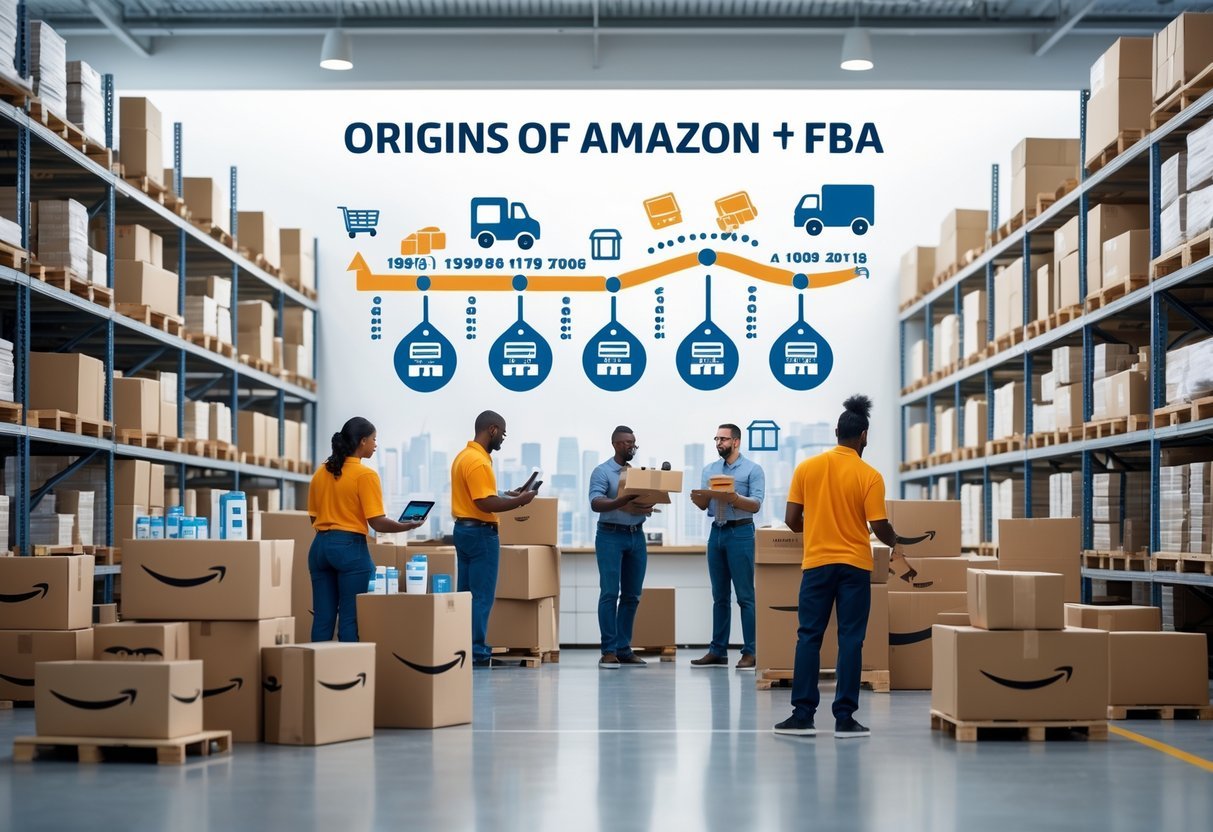
Amazon FBA actually started as a fix for Amazon’s own headaches with shipping and storage, before it ever became a service for sellers everywhere. Over the years, it’s grown into this massive system that’s changed how you store, ship, and scale products online.
Amazon’s Early Fulfillment Challenges
Back in 1994, when Jeff Bezos launched Amazon (it was called Cadabra at first—yeah, really), it was just an online bookstore. But sales took off, and Amazon quickly branched out into all sorts of other stuff, which brought a whole new set of logistics headaches.
Honestly, you’d probably have run into the same issues: not enough warehouse space, shipping costs going up, and orders taking too long. Amazon needed a way to get products out the door quickly and reliably, all across the US.
Their fix? Build their own fulfillment centers. These giant facilities let Amazon store loads of inventory, process orders faster, and cut down delivery times. With more control over the supply chain, they could keep customer service consistent.
That setup worked well for Amazon’s own stuff, but it also made something obvious: independent sellers just didn’t have the same resources to manage storage and shipping at scale. That’s where Fulfillment by Amazon came in.
The Launch of Fulfillment by Amazon in 2006
So, in 2006, Amazon rolled out Fulfillment by Amazon (FBA) as a brand-new program. The pitch was pretty straightforward: send your inventory to an Amazon warehouse, and they’ll handle storage, packing, and shipping.
This opened up Amazon’s logistics muscle to anyone, no need to build your own system. Plus, your products could get the coveted Prime shipping badge, which is a huge boost for sales and visibility.
Amazon really sold FBA as a way for small businesses to break through the barriers. Instead of sweating the details of order management, you could focus on finding great products and building your brand.
According to Hivearchive, the whole thing started as an offshoot of Amazon’s internal fulfillment system. It caught on fast because it solved real headaches for sellers who didn’t have big infrastructure.
Expansion to Third-Party Sellers
After launch, FBA quickly opened up to more and more third-party sellers. Suddenly, you could compete with the big guys on Amazon.com, offering the same fast shipping and customer service.
This changed the whole marketplace dynamic. Amazon wasn’t just selling its own stuff anymore—it had become a platform where independent sellers could really thrive. Eventually, third-party sellers were responsible for more than half of everything sold on Amazon.
The appeal was obvious: you could scale up without hiring a team, leasing warehouses, or dealing with returns yourself. Amazon took care of the grunt work, so you could focus on sourcing and marketing.
Of course, there were new costs, too. Storage fees, fulfillment fees, and long-term inventory charges meant you had to watch your margins. Still, for a lot of sellers, FBA became a must-have tool for growing their e-commerce business.
Key Milestones in FBA’s Growth
There’ve been some pretty big milestones as FBA turned into a global powerhouse:
- 2006: Fulfillment by Amazon officially launches.
- 2007–2010: Amazon builds out more fulfillment centers across the US and Europe.
- 2015: Third-party sellers hit around 50% of sales on Amazon.com.
- 2017–2019: International FBA programs take off, letting you sell across borders.
- 2020 onward: The pandemic hits, e-commerce explodes, and FBA demand goes through the roof.
Each step showed just how much Amazon was willing to invest in logistics—more warehouses, faster delivery, and new tools to help sellers manage inventory.
As ProSyncedu points out, FBA went from a simple perk to a full-blown ecosystem. These days, it supports millions of sellers and is a big part of why Amazon dominates online retail.
By plugging into FBA, your business gets the same reach and reliability as anything Amazon sells itself. Not a bad deal, right?
Impact and Transformation of E-Commerce Through FBA
Amazon FBA has pretty much rewritten the rules for how you sell, ship, and grow in online retail. It’s changed what customers expect, how businesses run, how far you can reach, and honestly, it’s tied into a bunch of other Amazon innovations too.
Prime Shipping and Customer Experience
Thanks to FBA, your products can get that Amazon Prime badge, which means customers expect lightning-fast delivery. Prime members want two-day—or even same-day—shipping, and FBA lets you meet those expectations without building your own logistics empire.
That Prime badge? It’s a trust signal. Buyers are way more likely to click “Buy Now” if they know Amazon is handling the shipping.
FBA also takes care of customer service and returns, which is a relief. You don’t have to worry about every little issue, and buyers get consistent support. Outsourcing all that lets you focus on finding products and building your brand, not chasing packages.
It’s even changed how people shop. Shoppers often filter for Prime-eligible stuff first, so if you’re using FBA, your products get more eyeballs—and, hopefully, more sales.
Business Models Enabled by FBA
FBA isn’t just for one kind of seller. You can build a private label brand, do wholesale, or even try retail arbitrage (that’s buying stuff cheap and flipping it). No matter the model, Amazon handles the heavy lifting—storage, packing, delivery.
Private label sellers especially love FBA for scaling up. You can send a bunch of inventory to Amazon, let them ship it out, and spend your time growing your brand instead of packing boxes.
Wholesale folks get access to Amazon’s huge customer base without needing their own warehouse. Retail arbitrage sellers can experiment quickly—ship products to FBA, reach Prime shoppers, and see what sticks.
Of course, you’ve gotta keep an eye on FBA fees—storage, fulfillment, returns. Those can eat into your margins, so you have to plan carefully. But the trade-off? Less overhead, faster shipping for your buyers, and way less hassle.
Influence on Global Online Retail
FBA isn’t just a US thing anymore. You can sell to buyers in over 100 countries now, all without setting up your own global logistics.
Amazon’s move to regional fulfillment hubs has cut delivery times and shipping costs in a lot of places. That’s good news for you and your customers—faster, cheaper, more reliable.
It’s also put pressure on traditional retailers. With FBA, Amazon set the bar for fast delivery, and now everyone from Walmart to Shopify is scrambling to catch up. Pretty wild how one program has shaped so much of e-commerce logistics.
If you’re a seller, you benefit from Amazon’s scale. Millions of shoppers hit the marketplace daily, and FBA helps you reach all of them.
Notable Acquisitions and Innovations
Amazon’s big buys and product launches have only made FBA more important. Buying Whole Foods gave Amazon physical stores for faster grocery delivery. Acquiring Zappos and Twitch expanded Amazon’s reach into fashion and streaming, while FBA kept anchoring its e-commerce core.
Amazon’s own gadgets—Kindle, Fire TV, Echo, Alexa—keep people plugged into the Amazon ecosystem, which is great for you as a seller. More traffic, more potential buyers.
And behind the scenes, AWS powers the tech that keeps FBA’s logistics humming. That backbone helps you get products to customers quickly, even as the business keeps scaling up.
On the money side, Amazon’s listed on NASDAQ as AMZN, and its growth is tied closely to services like FBA. As Amazon keeps rolling out new tools and innovations, you get access to more ways to make selling easier and more efficient.
Frequently Asked Questions
If you want to really get Amazon FBA, it helps to look at how it started, how its fees and logistics have changed, and the nuts and bolts behind its growth. These pieces show how Amazon built a fulfillment network that’s still shaping online selling around the world.
What is the origin and development of Amazon FBA?
Amazon rolled out Fulfillment by Amazon in 2006. It started as a way for sellers to store their products in Amazon warehouses while Amazon took care of packing, shipping, and customer service. Over time, it’s grown into a global network supporting millions of sellers and connecting them to Prime customers everywhere.
How have Amazon FBA fees changed over time?
In the beginning, storage and fulfillment fees were simpler (and honestly, a bit lower). As more sellers jumped in, Amazon added long-term storage fees and stricter inventory rules to keep warehouses running smoothly. These days, fees depend on product size, weight, and even the season, so you really have to watch your costs if you want to stay profitable.
What are the different types of Amazon’s fulfillment centers?
Amazon runs standard fulfillment centers for everyday products, special centers for oversized stuff, and even facilities just for apparel or perishables. They’ve also got sortation centers and delivery stations to speed up the last stretch of shipping. Each type plays its own part in getting products to buyers fast.
In what ways has Amazon’s supply chain contributed to its market dominance?
Amazon’s built a gigantic logistics network—regional warehouses, smart software, and speedy delivery services. By controlling more of the supply chain, they’ve cut shipping times and costs. That efficiency helped Amazon grab a huge chunk of the e-commerce market and set the bar for customer expectations.
How does the Amazon fulfillment process work?
You send your inventory to Amazon’s fulfillment centers. When a customer orders, Amazon’s team (or sometimes robots) pick, pack, and ship the item. They also handle returns and customer service, which saves you time and lets you focus on growing your business instead of dealing with logistics headaches.
Can you explain the evolution of Amazon Global Logistics?
Amazon Global Logistics actually started out as a pretty straightforward solution for sellers who needed to get their products into the United States. But, as you might expect, things didn’t just stop there. Over the years, it’s grown—now it covers not just the US, but Europe, Asia, and a handful of other regions too. These days, it’s a much more robust setup: ocean freight, air freight, customs clearance, all that good stuff. The idea is to give you a lot more hands-on control when you’re importing products into Amazon’s global network. Honestly, it’s kind of impressive how much it’s changed by 2026.