Dropshipping from Amazon to eBay is basically about listing products you find on Amazon in your eBay store, then only buying them after someone actually places an order. You spot something on Amazon, put it up on eBay for a bit more, and when a customer bites, you order from Amazon and send it right to them. Whatever’s left after Amazon’s price and fees is your profit—simple in theory, but there’s a bit more to it.
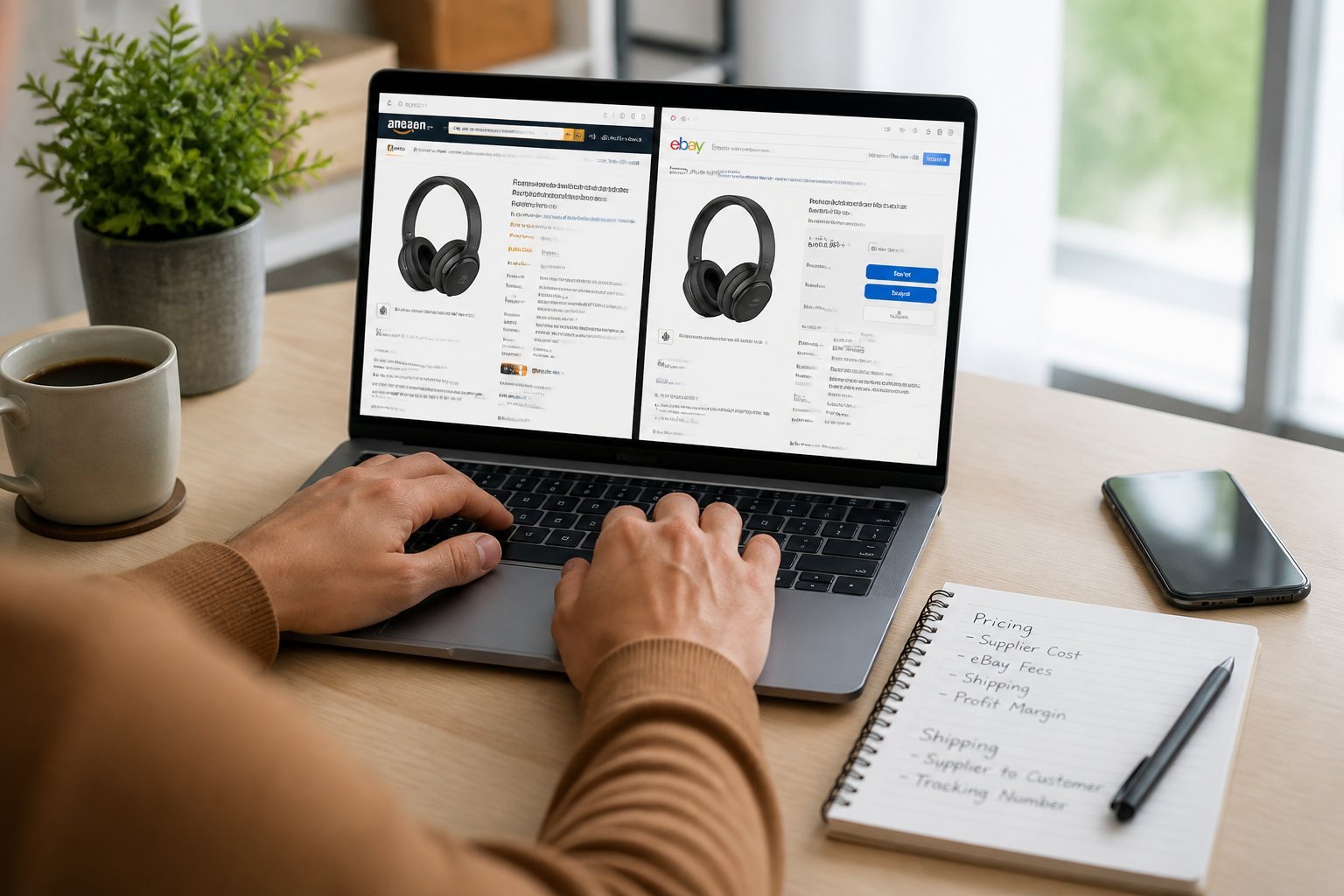
Amazon to eBay dropshipping lets you start an ecommerce business without holding inventory, but you really have to play by both platforms’ rules or you risk getting your account suspended. A lot of folks try this model since it doesn’t take much upfront cash compared to old-school retail. No need to stock up or worry about a warehouse.
This approach isn’t without its own set of rules. Amazon and eBay both have policies about dropshipping to protect buyers and keep their marketplaces running smoothly. If you get a handle on these before jumping in, you’ll be much better off in the long run.
Key Takeaways
- You can dropship from Amazon to eBay by listing Amazon products on eBay and ordering them after customers purchase from you
- Sticking to eBay and Amazon policies is a must if you want to avoid bans and keep your accounts healthy
- Using automation tools and keeping an eye on your seller metrics helps you manage orders (and your sanity) as your business grows
Understanding Amazon to eBay Dropshipping
This model lets you sell on eBay without ever touching the inventory—you’re just buying stuff from Amazon after you’ve already made a sale. The trick is finding those price gaps and juggling the orders between both sites.
How the Model Works
When you dropship from Amazon to eBay, you’re basically listing products from Amazon’s huge catalog on your eBay store, but with a markup. No need to buy anything upfront or worry about storage.
Here’s how it usually goes:
- Spot a product on Amazon you think will sell
- List it on eBay for a higher price
- Wait for an eBay customer to place an order
- Order the item from Amazon using your buyer’s shipping info
- Amazon ships it straight to your eBay customer
Some people call this online arbitrage or retail arbitrage—you’re basically the go-between for Amazon’s supply and eBay’s shoppers. The real money is in the price difference between what you get paid on eBay and what you pay Amazon.
The big draw? You don’t need a lot of cash to start, since you only buy stuff after you’ve sold it.
Pros and Cons of Amazon to eBay Arbitrage
Advantages:
- Low startup costs – no need to buy inventory until you make a sale
- No storage headaches – Amazon does the warehousing and shipping for you
- Huge product selection – you can tap into millions of Amazon items
- Work from anywhere – the whole thing runs online
Disadvantages:
- Thin profit margins – competition can eat into your earnings, sometimes down to 10-20% per sale
- Policy headaches – break the rules and you could lose your account, no warning
- No quality control – you never see the product before your buyer does
- Stock issues – Amazon might sell out after you’ve already made a sale on eBay
- Tracking hassles – Amazon’s TBA tracking numbers don’t always play nice with eBay
Getting familiar with Amazon to eBay dropshipping policies is honestly essential if you want to avoid nasty surprises. Both sites can shut you down if you mess up.
Key Terms and Concepts
Amazon to eBay arbitrage is just buying low on Amazon and selling high on eBay, pocketing the difference. Your profit margin is whatever’s left after Amazon’s cost, eBay fees, and other expenses.
Retail arbitrage is buying stuff from retail stores or websites to resell elsewhere. If you’re doing it all online, it’s called online arbitrage.
Price difference is the gap between what you pay on Amazon and what someone will pay you on eBay. Don’t forget about eBay’s selling fees (usually 12-15%) and other costs when you’re running the numbers.
TBA tracking is Amazon’s own internal tracking system (“To Be Announced”). eBay wants real USPS, FedEx, or UPS tracking, so TBA numbers can get you in trouble if you don’t convert them to something legit.
Evaluating Legality and Platform Policies

Dropshipping from Amazon to eBay is legal, sure, but both Amazon and eBay have their own rules—and they don’t mess around. If you want to avoid getting suspended, you really need to know the restrictions and stick to them.
eBay Dropshipping Rules and Restrictions
eBay dropshipping is allowed, but only if you follow their pretty strict policies. You have to be the seller of record for everything you list—which means the buck stops with you for every order and delivery.
eBay doesn’t want their buyers getting packages with Amazon logos or receipts inside. If your customer opens a box and it’s clearly from Amazon, that’s a violation. You can’t use another company’s packaging or invoices, period.
Shipping within your stated handling time is non-negotiable. Your eBay account health depends on good performance metrics, and late shipments or tracking slip-ups can get you flagged.
Key eBay restrictions:
- You must list the item before making the sale
- No retail packaging or receipts from other companies
- You’re on the hook for returns and customer service
- No dropshipping prohibited items
Break these rules too often and your eBay business account could get suspended—sometimes without much of a warning.
Amazon’s Stance on Resale and Fulfillment
Amazon lets you buy stuff to resell, but if you use Amazon Prime for business orders, that’s a no-go. Your Amazon account should be a regular customer account, not a Prime membership used for dropshipping.
Amazon also keeps an eye out for big buying patterns that look like resale. If they suspect you’re buying to resell on other platforms, you could get your account limited or even shut down. Their FBA inventory is for Amazon sellers—not for fulfilling eBay orders.
Even using FBM (Fulfilled by Merchant) Amazon listings is risky. Amazon tracks your orders and shipping addresses, and if you have a bunch of orders going to different places, that’s a red flag for them.
Bottom line, Amazon doesn’t want to be a supplier for their competitors. Can’t really blame them, right?
Risks of Policy Violations
Policy violations can result in immediate account suspension on both sites. eBay can pull your selling privileges if customers complain about Amazon packaging, or if your defect rate gets too high.
If Amazon figures out you’re reselling, you could lose your account there too. And once you’re suspended, it’s not easy to get back in—on either platform.
There’s also the financial side: eBay can freeze your funds for up to 90 days after suspension, and you’re still responsible for returns and disputes, even if your account is closed.
Common violation triggers:
- eBay buyers getting Amazon-branded packaging
- Late shipments because of Amazon delivery delays
- Too many customer complaints or defects
- Weird buying patterns on your Amazon account
If you’re serious about this, you’ll need a plan to stay compliant and keep both accounts in good shape.
Creating a Strong Foundation for Your Business
Before you get started with Amazon to eBay dropshipping, you need the basics: proper accounts, legal registration, and a way to get paid. These are the building blocks, and skipping them can make life a lot harder later.
Setting Up Seller Accounts
You’ll need both an eBay seller account and an Amazon account to make this work. Your eBay seller account is where buyers shop, and your Amazon account is how you get the products once you make a sale.
If you’re planning to sell regularly, go for an eBay business account. That gives you higher selling limits and some handy tools. Be ready to verify your ID and provide all your details.
Your Amazon account can just be a regular customer account for purchases. It’s smart to use a different email than your eBay account to keep things separate. Both sites will want your payment info when you set up.
Registering the Legal Entity and EIN
It’s a good idea to register your business and get an Employer Identification Number (EIN) from the IRS. The EIN is like a Social Security number for your business—it keeps your personal and business finances separate.
Most dropshippers go with a sole proprietorship or LLC. You can snag an EIN online at the IRS site for free—it only takes about 15 minutes and you get it right away.
With an EIN, you can open business bank accounts and start building business credit. You’ll also need it for tax time when you file for your dropshipping income.
Establishing Payment Processing
eBay Managed Payments takes care of transactions for your eBay business account. It processes customer payments and drops the funds into your bank account after fees are taken out.
The payment processing fee depends on your product category, but it’s usually between 12.35% and 14.95% of the sale price. That covers both the final value fee and payment processing.
You have to link a checking account to get paid by eBay Managed Payments. Payouts usually hit your bank within a couple of business days after a sale. Make sure to set up your business policies inside eBay—shipping, returns, payment terms—so you protect your margins and avoid headaches later.
Product Research and Sourcing Strategies
Picking the right products is all about understanding what people want and what actually sells. You’ll need to dig into market demand on both eBay and Amazon, check prices, and make sure there’s enough profit left after all the fees. It’s not always obvious, but with a bit of research and some trial and error, you’ll get the hang of it.
Conducting Effective Market Research
Start by poking around Amazon Best Sellers to get a feel for which products are hot and actually moving. Try browsing a few categories—sometimes what’s popular isn’t always what you’d expect, and it’s better to spot items with steady sales instead of just chasing the latest fad.
Check out eBay’s sold listings to see what people are really buying there. Set the filters to “sold items” and “completed listings” so you’re not just guessing—this is real sales data. Notice not just the prices but how fast stuff is selling. Some things just sit there forever, you know?
Google Trends is handy for making sure there’s actual interest in a product over time. You want to avoid products that are nosediving in search volume or only spike for a week or two—unless you’re cool with riding those waves and planning around them.
It’s always good to compare prices between Amazon and eBay for the same product. You’ll need enough wiggle room to cover Amazon’s cost, eBay’s fees, and still walk away with something in your pocket.
Choosing Profitable Products
Try to pick items priced between $20 and $100 on eBay. That sweet spot usually gives you better margins, but it’s not so expensive that a return or issue will ruin your week.
Honestly, I’d steer clear of electronics, big brand names, or anything with strict manufacturer rules. Those categories can be a headache—think account suspensions or IP complaints. Save yourself the trouble.
Look for products with a bunch of Amazon sellers but not much competition on eBay. That’s where you’ll find opportunity—if everyone’s already on eBay, it’s probably too late.
Don’t forget to do the math after all the fees. eBay takes their cut, PayPal or payment processors want a piece, and you’ve still got Amazon’s price (plus tax). It adds up fast.
Ideal Product Characteristics:
- Lightweight and small—shipping’s just easier
- Durable (nobody wants to deal with broken stuff in the mail)
- No batteries or hazardous materials
- Good, clear product photos available
- Stable pricing on Amazon (no wild swings)
Leveraging Analytics and Research Tools
ZikAnalytics gives you eBay-specific data to help spot profitable products and size up the competition. It’ll show you sales estimates, competition, pricing trends—the works.
Terapeak is built right into eBay and gives you historical sales data. Want to know how something sold last winter? You can check and see if it’s worth jumping in now.
Honestly, these tools save a ton of time. You get average selling prices, sales volume, and how many sellers are in the same category without spending hours digging.
Keep an eye on your competitors’ listings and prices with analytics tools. Who’s actually making sales? How are they titling and describing their items? There’s a lot to learn just by watching what works.
Listing Optimization and Pricing Tactics
Your success really comes down to making listings that draw buyers in and pricing that leaves you with a profit. Good product listings and smart pricing are how you stay in the game on eBay, plain and simple.
Optimizing Product Listings
Strong listings mean detailed titles, clear descriptions, and sharp images. For your eBay title, pack in the keywords buyers actually search for—brand, model, color, size, whatever fits. You get up to 80 characters, so don’t waste space.
Item specifics are required now, and they help buyers filter results. Fill out every field you can with info from Amazon—brand, MPN, condition, or anything category-specific. The more details, the better.
Use high-quality images from the Amazon listing (assuming they’re good). eBay lets you upload up to 12 photos, so show off different angles and close-ups. Clear pics mean fewer buyer questions and less chance of returns.
Your description should hit the highlights and benefits, but don’t just copy-paste Amazon’s text. List the specs, dimensions, and what’s included. Think about what you’d want to know if you were buying—answer those questions up front.
Competitive Pricing and Markup
Your pricing has to cover all your costs and still be competitive. When figuring out your eBay dropshipping prices, add up Amazon’s cost, shipping, eBay’s final value fee, and payment processing fees.
Most people go for a markup between 10% and 30% over total costs. If you’re selling something rare, you can push higher. If it’s a common item, you’ll probably need to keep it tight or you’ll get undercut.
Always check what others are charging before you list. Search for your product on eBay, filter by sold listings, and see what’s actually moving. Don’t just aim for the highest price you see—go for what’s realistic.
Keep an eye on Amazon prices because they change all the time. Something that’s profitable today might not be tomorrow if Amazon bumps their price up. Regular price checks are just part of the job.
Bulk and Automated Listing Tools
If you’re listing a bunch of products, bulk tools save you tons of time. Instead of making every listing by hand, you can upload info for dozens—or hundreds—at once. eBay’s File Exchange and Turbo Lister (if you can still find it) let you upload with CSV files.
Automation software can link your eBay and Amazon accounts and handle a lot of the grunt work. These tools import product details, keep inventory synced, and update prices based on your rules. Some of the more popular ones are designed for Amazon to eBay arbitrage specifically.
Here’s what to look for in bulk listing tools:
- Automatic price updates when Amazon changes prices
- Inventory syncing so you don’t sell out-of-stock stuff
- Order processing that buys from Amazon for you
- Listing templates to speed up uploads
Automated tools aren’t free, but they’re worth it once you’re juggling 50-100+ active listings. Start out manual so you learn the ropes, then automate as you grow.
Fulfillment, Shipping, and Returns Management
When you’re dropshipping from Amazon to eBay, you don’t have much control over fulfillment or shipping speed. Your handling time depends on Amazon’s delivery performance, and returns can get messy since you’re dealing with two platforms.
Order Management and Automation
At first, you’ll probably place Amazon orders manually every time you get an eBay sale. But as you scale up, that gets old fast—and mistakes happen.
Most sellers switch to automation software to sync orders between platforms. The software buys from Amazon as soon as you get a sale on eBay and updates the tracking info automatically when Amazon ships it.
Some must-have automation features:
- Automatic order placement on Amazon
- Real-time inventory syncing
- Tracking number updates to eBay
- Price monitoring and auto-adjustments
- Stock alerts if something goes out of stock
If you’re doing everything by hand, you risk selling stuff that’s already sold out on Amazon. Plus, manual processing slows you down, which can lead to late shipments—and eBay isn’t forgiving about that.
Shipping and Handling Policies
Set your eBay handling time to at least 3-5 business days. You can’t offer Prime shipping to eBay buyers, even if you’re using Amazon Prime. That buffer covers both Amazon’s shipping and any hiccups.
Some shipping tips:
- Free shipping: Build Amazon’s shipping cost into your eBay price
- Fast shipping: Only promise what Amazon can actually deliver
- Shipping policies: Spell out delivery expectations clearly in your listings
- Tracking: Always give buyers the Amazon tracking number
Bottom line: You don’t control shipping—Amazon does. So you can’t guarantee delivery dates or upgrade shipping after the order’s placed. Sometimes, you just have to cross your fingers.
Managing Returns and Customer Satisfaction
Returns are tricky because your buyer is on eBay, but the product came from Amazon. It’s a bit of a dance.
Ideally, ask customers to send returns to you first—then you process the Amazon return. It takes longer, but you stay in control. If you give customers Amazon’s return address, they’ll probably figure out you’re dropshipping.
How to handle returns:
- Accept the return request on eBay ASAP (within 24 hours if you can)
- Start a return on Amazon for the same item
- Send the buyer the right return label or instructions
- Refund the buyer on eBay after Amazon accepts the return
You can’t really control Amazon’s packaging or packing slips, so some buyers will notice. Neutral packaging is best, but it’s hit or miss.
Match or beat eBay’s return policy—30 days minimum is the standard. Quick responses and easy returns keep your account healthy and your feedback positive. Mess up returns, and you’ll see your seller metrics tank.
Using Dropshipping Software and Automation Solutions
Dropshipping software takes care of the repetitive stuff—inventory, pricing, and syncing orders between Amazon and eBay. These tools save your sanity and a lot of hours.
Inventory and Repricing Tools
You’ll want dropshipping software that keeps an eye on Amazon’s stock and updates your eBay listings automatically. If something goes out of stock on Amazon, your software should pull or pause the eBay listing before you accidentally sell it.
Repricing tools are a lifesaver for staying competitive. They track price changes on both platforms, so you don’t get caught selling at a loss. Most of these tools check prices several times a day and tweak your listings based on your rules.
Look for these features:
- Real-time inventory updates
- Automatic price adjustments
- Order automation
- Multi-channel support
- Stock alerts
Your repricing strategy should factor in Amazon’s price, eBay’s fees, and your profit target. The software does the math and keeps you in the black even when things shift.
Top Dropshipping Platforms and Apps
AutoDS gives you Amazon to eBay integration with automatic product imports and order fulfillment. You can bulk-import ASINs and monitor inventory from multiple suppliers.
Easync is another all-in-one automation tool that lets you bulk-import ASINs straight to your eBay store. It’s built to bridge Amazon and eBay for smooth dropshipping.
Other options: DSM Tool for listings, SaleFreaks for research and repricing, and Doba for more supplier choices. Each platform has its quirks and pricing, so pick what fits your style and business goals.
Monitoring Seller Metrics and Account Health
Your seller performance is everything if you want to keep dropshipping from Amazon to eBay long-term. eBay watches certain metrics closely, and if you slip, you could lose visibility or even face restrictions.
Key Performance Metrics on eBay
eBay looks at a handful of key seller metrics you’ll want to keep on your radar. Your defect rate (think order issues, unpaid cases, not-as-described items) needs to stay below 2% if you want to keep your account in good shape.
The late shipment rate tracks how often you miss your promised handling time. Always upload tracking quickly and make sure it shows movement within your stated window.
Your tracking upload rate is about how reliably you upload tracking numbers. Aim for at least 95%—eBay expects it.
Seller rating is based on buyer feedback and detailed ratings. This impacts your search ranking and buyer trust, so keep an eye on your score and handle negative feedback professionally.
The sell-through rate shows what percent of your listings actually sell. A higher rate boosts your visibility and helps you avoid extra listing fees. Keep tweaking until you find what works.
Avoiding Suspensions and Defects
Account suspension—it happens if you miss eBay’s performance standards or break their policies. You can keep tabs on your numbers and spot trouble early by checking the CBT Seller Dashboard. It’s not exactly thrilling, but it’s way better than scrambling after the fact.
Most defects? Honestly, they come from shipping delays (thanks, Amazon), wrong product info, or stuff arriving banged up. If you’re dropshipping from Amazon to eBay, you really need to double-check that Amazon actually has the item in stock before you list it. Otherwise, you’re setting yourself up for headaches.
Final value fees and other eBay fees can jump up if your account slips below standard. You’ll lose out on fee discounts and some promotional perks if your metrics drop into that dreaded below standard range.
At the very least, check your dashboard weekly. If you spot a transaction defect, jump on it fast—talk to your buyers, sort it out before they file a case. It’s just not worth letting stuff fester.
Exploring Compliant and Sustainable Alternatives
If you want to get away from the whole Amazon-to-eBay dropshipping thing, you’ll need suppliers who actually let you resell their stuff without breaking eBay’s rules. Wholesale suppliers or private label options give you more control over your business—and you’ll stay on eBay’s good side.
Partnering with Wholesale Suppliers
Wholesale suppliers let you buy at lower prices and still follow eBay’s dropshipping guidelines. These folks will ship straight to your customers, using your business name, so you don’t have to worry about policy violations.
SaleHoo connects you with verified wholesale suppliers and even has a product research tool to help you spot what’s actually selling. They vet suppliers too, so you’re less likely to get scammed or end up with a flaky partner.
Worldwide Brands gives you a lifetime membership to a big directory of certified wholesalers and light bulk distributors. Pay once and you’re in—lots of product categories to poke through.
Alibaba is a solid choice if you’re up for buying stuff in bulk at wholesale rates. You’ll be haggling directly with manufacturers, but heads up: you usually have to buy bigger quantities compared to other dropshipping sources.
These kinds of partnerships usually mean better profit margins than just flipping retail stuff. Plus, you avoid the compliance mess that comes with Amazon dropshipping.
Private Label and Print-on-Demand Options
Private label products are basically your own branded items, even though someone else is making them. It’s a great way to build up brand recognition—and honestly, the margins can be pretty nice.
You can find private label products on Alibaba by working with manufacturers who’ll customize packaging and branding for you. You’ll need to order in bulk, usually starting at 100–500 units depending on what you’re selling. Not exactly small potatoes, but the upside is real.
Print-on-demand services like Printful let you sell your custom-designed stuff without keeping inventory. They’ll make and ship it as orders come in, which is pretty convenient.
Print-on-demand is especially good for:
- Custom clothes and accessories
- Home décor
- Personalized gifts
- Branded merch
Margins aren’t as high as with regular dropshipping, but honestly, having zero inventory risk is a relief. You only pay for products after someone buys from your eBay store, so there’s not much to lose.
Frequently Asked Questions
eBay’s policies do let you dropship from third-party suppliers, but you’ve got to deliver on time and provide real tracking. The tricky part is juggling fees between both platforms, avoiding account suspensions, and keeping your margins healthy while staying within the rules. It’s a balancing act.
Is it permitted to list items on eBay that are fulfilled by Amazon?
eBay allows dropshipping—as long as you play by their rules. You can use Amazon as your supplier, but you’re supposed to be the seller of record on every packing slip and invoice.
No Amazon branding, no Amazon packing slips, no Amazon invoices—none of that can go in your shipments to eBay buyers. The package should look like it’s coming from you or your business, not Jeff Bezos.
If a buyer gets something with Amazon’s name plastered all over it, they might open a case against you. That leads to negative feedback, account defects, and maybe even suspension. Not worth the risk, honestly.
What are the biggest risks and common account issues when fulfilling eBay orders through Amazon?
Account suspension is probably the biggest nightmare here. eBay watches dropshipping like a hawk and will suspend you if you rack up policy violations or too many unhappy customers.
Late shipments are a constant headache, since you’re at the mercy of Amazon’s delivery times. If Amazon’s slow or runs out of stock, your eBay metrics are going to take a hit.
Customers aren’t thrilled when their order shows up in an Amazon box instead of plain packaging. That’s a policy violation and, honestly, it just looks bad for your brand.
And don’t forget price swings on Amazon. If their price jumps after you’ve listed an item, you could end up losing money on the sale. It’s a bit of a gamble.
How do you handle tracking numbers and delivery confirmations when the supplier is Amazon?
Amazon gives you tracking numbers in their order confirmation emails. You’ve got to grab those and upload them to eBay within your handling time—don’t forget, or your metrics will suffer.
eBay wants valid tracking that shows delivery to the buyer’s address. Amazon’s tracking usually works, as long as it scans in the carrier’s system the right way.
It’s smart to check your Amazon orders every day and pull tracking info as soon as it’s available. If you’re late uploading, you might get dinged with defects on your eBay account.
Some automation tools help manage tracking by pulling numbers from Amazon and uploading them to eBay automatically. That saves a lot of hassle and helps prevent missed uploads.
What tools or software are commonly used to automate listing, pricing, and order routing between Amazon and eBay?
Repricing software is a lifesaver—it’ll adjust your eBay prices automatically when Amazon’s prices change. That way, you don’t accidentally sell at a loss or price yourself out of the market.
Listing tools can copy product info from Amazon to eBay, including titles, descriptions, and photos. Be careful though—always check that the images and content are legal to use. Copyright issues are no joke.
Order management software can even automate buying from Amazon when you get a sale on eBay. Most of these tools also handle uploading tracking numbers for you.
Some sellers go for specialized dropshipping platforms that handle listing, repricing, and order fulfillment all in one place. They usually charge a monthly fee or take a cut per transaction.
How do you calculate fees, taxes, and profit margins to ensure a listing is actually profitable on eBay?
eBay charges a final value fee—usually around 12.9% plus $0.30 per order for most categories. Then you’ve got payment processing fees (PayPal or managed payments), which are about 2.9% plus $0.30.
Add in your Amazon product cost, shipping, and any sales tax you’ll pay on the Amazon side. Some states want sales tax even if you’re a reseller, so watch out for that.
Your profit margin is whatever’s left after all that: eBay selling price minus every fee, Amazon cost, and tax. A decent margin for this model is usually 15–25% after expenses, but it can shrink fast if you’re not careful.
I’d say use a spreadsheet or calculator to check every item before you list it. Even a tiny price change can flip a profit into a loss. Better safe than sorry.
How much starting capital is typically needed to begin, and can you start with a very small budget?
You can actually get going with as little as $100 to $500, especially if you’re just listing stuff and buying it only after you make a sale. That’ll usually cover your eBay seller fees and your first few Amazon purchases—though, honestly, it can feel a bit tight at the start.
The real amount you’ll need depends a lot on how quickly eBay releases your funds. For new sellers, payment holds can last anywhere from 5 up to 21 days, so yeah, you’ll probably want enough cash on hand to buy products before you actually get paid.
If you’ve got a budget somewhere around $1,000 to $2,000, you’ll have more breathing room to deal with those payment holds and juggle a few orders at once. Plus, it gives you a chance to try out more products and see what actually sells well.
Don’t forget to set aside a little extra for customer refunds and returns. Returns are just part of the game with dropshipping, and you’ll need some spare cash to handle them while you’re waiting for reimbursements. It’s not fun, but it happens more often than you’d think.