







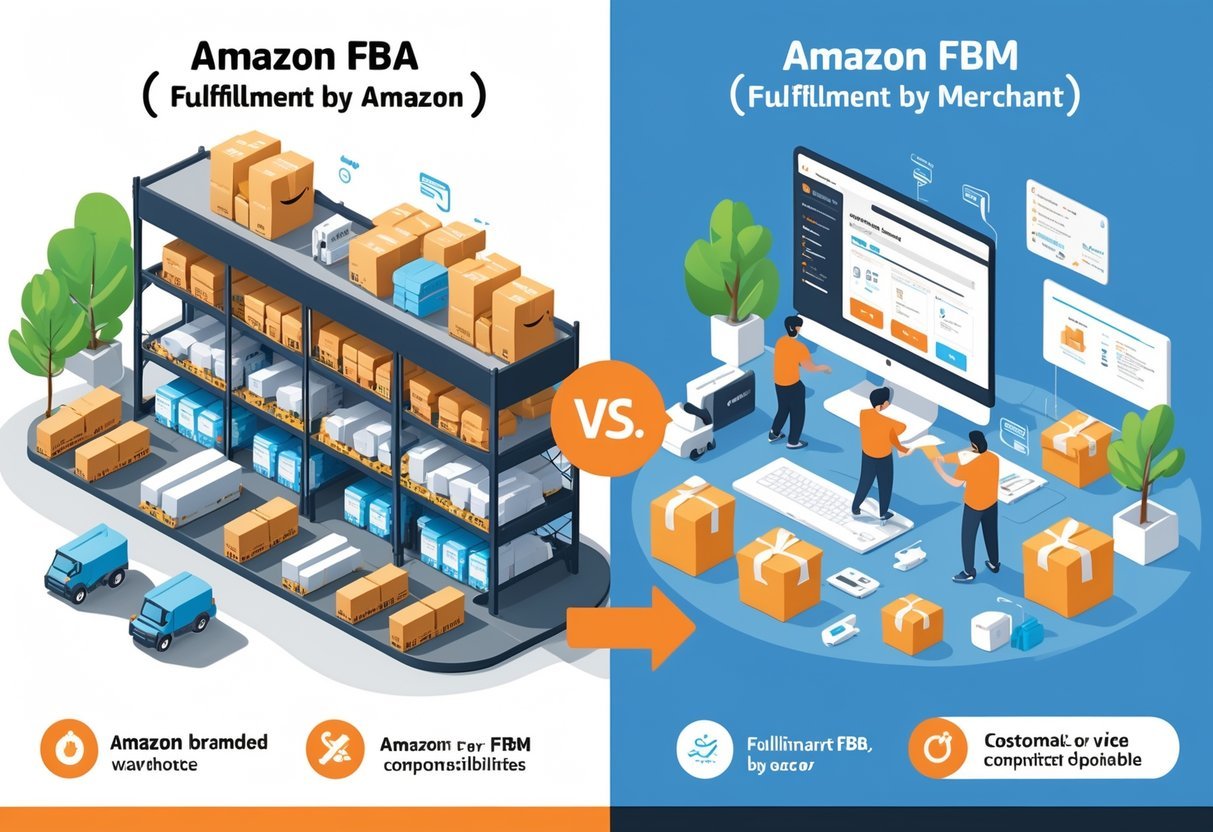
Picking how you’ll fulfill your Amazon orders is honestly one of those decisions that can make or break your business. The big thing to know is that Fulfillment by Amazon (FBA) means Amazon takes care of storage, shipping, and customer service, while Fulfillment by Merchant (FBM) leaves those jobs to you. This choice has a direct impact on your costs, your level of control, and how quickly you can grow—or not.

If you’re after a more hands-off setup, FBA can be a lifesaver by letting Amazon handle all the logistics. But if you’re the type who likes to control every detail—packaging, shipping, the whole customer experience—FBM could be a better fit. Both have their perks, and honestly, the “right” answer depends on your products, budget, and what you want out of your business.
Once you get how each model works, it’s a lot easier to figure out which one strikes the best balance of profit, flexibility, and growth for you.
Key Takeaways
- FBA and FBM mostly differ in who’s in charge of storage, shipping, and service
- Each has upsides and downsides depending on your setup and what you sell
- Choosing the right one can save you money and help you scale faster
Amazon FBA vs Amazon FBM: Core Differences
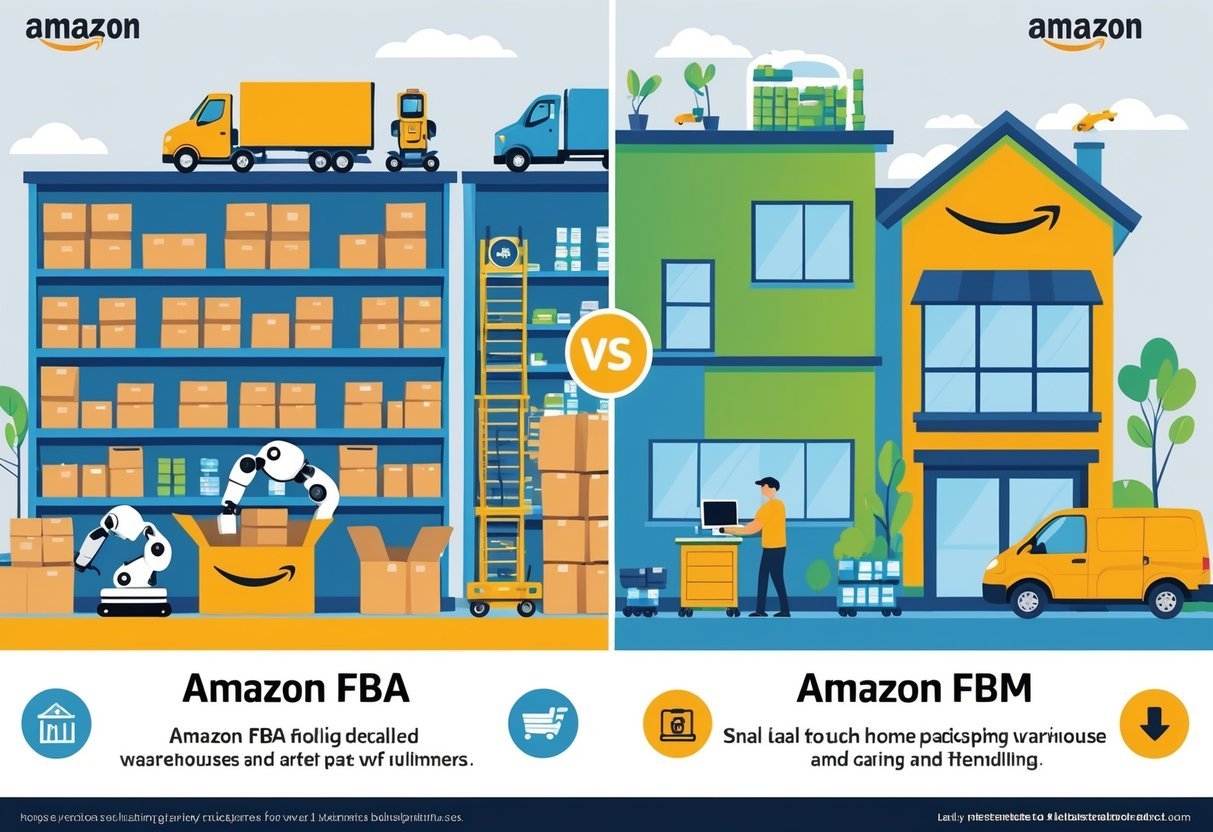
The way you handle fulfillment on Amazon changes everything—from how your products move through the supply chain, to how customers see your brand, to what you end up paying in fees. Whether you go with Fulfillment by Amazon (FBA) or Fulfillment by Merchant (FBM), you’re affecting logistics, Prime eligibility, and your overall cost structure.
Fulfillment Process and Logistics
With Fulfillment by Amazon (FBA), you send your stock straight to Amazon’s warehouses. They handle storage, picking, packing, shipping, customer service, and even returns. It’s pretty hands-off, but you do need to keep your inventory flowing and play by Amazon’s system.
FBM, on the other hand, means you’re storing and shipping products yourself (or maybe using a third-party logistics partner). You’re in charge of packaging, shipping choices, and returns. So, you get more control, but also more on your plate when it comes to hitting delivery standards.
FBA tends to shine for sellers with fast-moving, smaller items since Amazon’s network is built for speed. FBM can be a smarter move for bulky stuff or items that don’t sell quickly—otherwise, Amazon’s storage fees can eat into your profits.
Prime Eligibility and Customer Experience
With FBA, your products get that sweet Prime badge automatically, which means Prime’s two-day shipping is in play. That can bump up your sales, since tons of shoppers filter for Prime-only results. Amazon also takes care of customer service and returns, so you rarely (if ever) have to deal directly with buyers.
FBM listings don’t get Prime by default, but you can apply for Seller Fulfilled Prime (SFP) if you’re up for meeting Amazon’s (pretty strict) performance standards. That way, you can still show the Prime badge while handling your own shipping.
The customer experience definitely shifts, too. With FBA, Amazon controls packaging, shipping speed, and returns—good if you want less hassle, but you lose some control. With FBM, you’re in charge, which means more flexibility but also more risk if you drop the ball.
Cost Structure and Fees
FBA comes with fulfillment fees for picking, packing, and shipping, plus storage fees for keeping your stuff in Amazon’s warehouses. If your inventory sits too long, those fees go up (yep, aged inventory surcharges are a thing). For fast-selling, lightweight products, FBA fees can actually be pretty reasonable compared to running your own logistics.
FBM skips Amazon’s fulfillment fees, but you’re on the hook for your own warehousing, labor, packaging, and direct shipping costs. If you already have a solid logistics setup and can ship competitively, FBM might be the cheaper way to go.
Here’s a quick side-by-side:
| Factor | FBA | FBM |
|---|---|---|
| Fulfillment fees | Paid to Amazon | Paid by you (shipping + handling) |
| Storage fees | Charged by Amazon | Your own storage costs |
| Prime eligibility | Automatic Prime badge | Only with Seller Fulfilled Prime |
| Customer service | Handled by Amazon | Handled by you |
Sorting out these cost differences helps you figure out whether FBA or FBM fits your margins and business strategy better.
Want more details? Check out this Amazon FBA vs FBM comparison guide.
Choosing the Right Fulfillment Model for Your Business
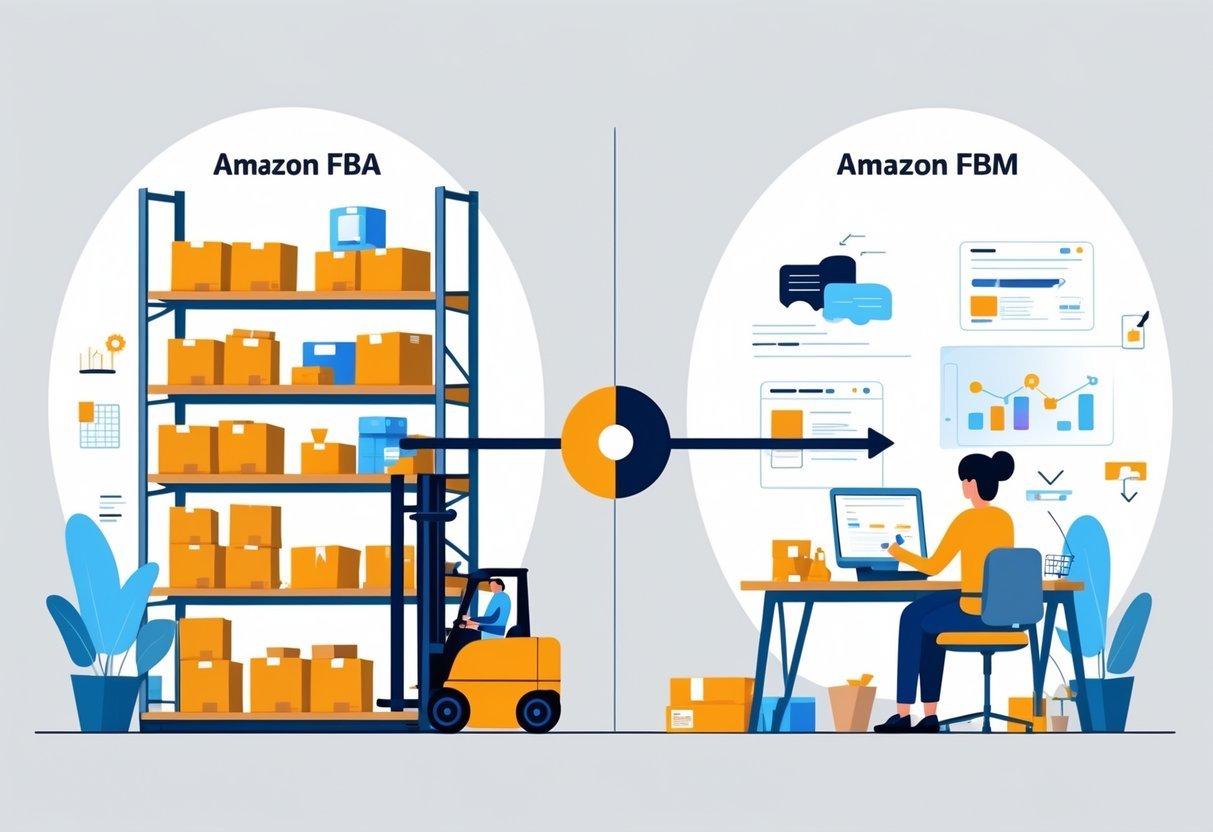
Deciding between FBA and FBM really comes down to how you want to handle costs, what you’re selling, and how you want to interact with your customers. There are trade-offs with each—profit, control, branding—that’ll shape your results on Amazon.
Profitability and Cost Considerations
With Fulfillment by Amazon (FBA), you’ll pay storage fees, fulfillment fees, and extra for returns and customer service. Sure, these FBA costs add up, but you often get lower per-unit shipping rates than if you did everything yourself. For lots of sellers, FBA just makes more sense when sales are high.
If you’re running things through FBM, you dodge Amazon’s storage fees but take on your own shipping, packaging, and labor costs. For slow-moving inventory or big, bulky products, FBM can be a lot less expensive than letting Amazon store your stuff.
It’s worth plugging your numbers into Amazon’s Revenue Calculator—it’ll help you see how both models stack up depending on storage time, seasonal swings, or refund rates.
Product Types and Sales Strategies
The stuff you sell is a huge factor. Smaller, lightweight things with steady demand? FBA is usually the winner, since you get fast shipping and that Prime badge, which can seriously boost your sales velocity.
Bigger, odd-shaped, or niche products that don’t move as quickly? FBM is probably better—you skip the high storage fees and only ship when you get an order. FBM also makes a lot of sense for seasonal products since you can hold inventory on your own terms.
Honestly, a lot of sellers mix it up. For example:
- FBA for fast-selling stuff like phone cases or books.
- FBM for furniture, custom products, or anything that needs special handling.
This kind of hybrid approach lets you play to the strengths of both models.
Branding and Customer Interaction
FBA means Amazon handles customer service, refunds, and returns. That’s a time-saver, but you lose almost all direct contact with buyers. If you’re looking to scale and don’t want to sweat the details, this is probably fine.
FBM puts you in the driver’s seat for customer interaction. You control packaging, shipping notes, and those little brand touches that can set you apart. Sellers who care about building a unique brand almost always lean this way.
You can toss in custom packaging or inserts to boost brand recognition. Sure, it takes more effort, but it can really help you stand out in a crowded marketplace. Plus, FBM gives you more flexibility if you’re selling on other channels outside of Amazon, since you control your whole supply chain.
Frequently Asked Questions
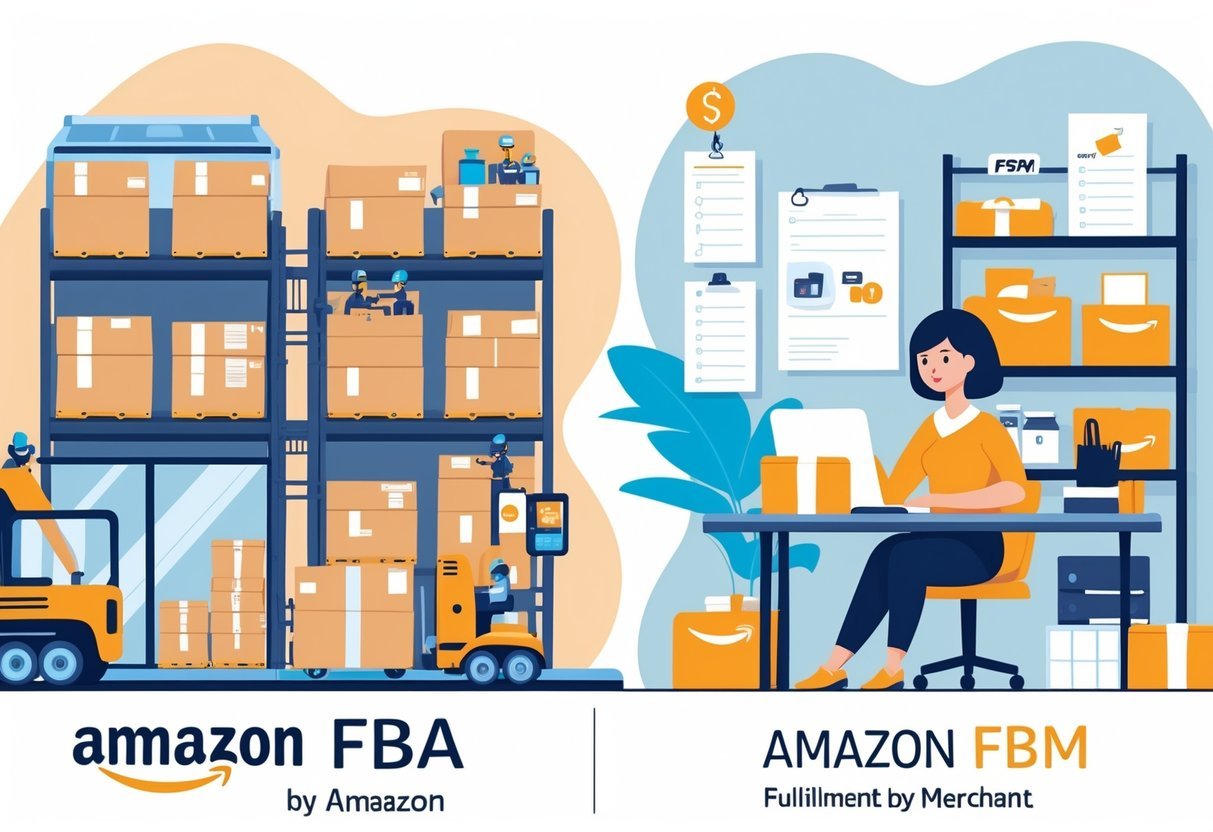
Costs, profits, and logistics can look pretty different depending on whether you use Fulfillment by Amazon (FBA) or Fulfillment by Merchant (FBM). Each has its own mix of fees, control, and customer experience, and what’s “right” really depends on your products, margins, and how you run things.
What are the primary cost differences between FBA and FBM?
FBA means you’re paying Amazon for storage, picking, packing, and shipping. These can add up fast, especially if you’re dealing with big or slow-selling items.
FBM skips those FBA fees, but you’re covering your own shipping, packaging, labor, and storage. For heavy products, FBM usually saves you money. For small, quick sellers, FBA tends to be cheaper.
How do fulfillment methods affect profitability between FBA and FBM?
Profitability really depends on what you’re selling and how much you sell. According to Jungle Scout’s comparison, FBM sellers often report higher margins, while FBA sellers benefit from scale and Prime visibility.
If your items are small and move quickly, FBA can be more profitable. If they’re bulky or slow, FBM might leave you with better margins.
What are the main advantages and disadvantages of FBA compared to FBM?
FBA gets you Prime eligibility, fast shipping, and Amazon handling customer service. But you pay higher fees and have less control over the customer side of things.
FBM can be cheaper for big or slow-moving items and gives you more say in the customer experience. The flip side? More work, possible slower shipping, and no automatic Prime badge.
Can you use a calculator to compare the costs of FBA versus FBM?
Absolutely. Amazon has an FBA revenue calculator that’ll help you estimate fees and compare them to your own fulfillment costs.
For example, if you’re selling something oversized like kayaks, the calculator usually shows FBA fees are way higher than FBM—so FBM makes more sense if you can handle the shipping on your own.
What are some common errors sellers make when using FBM?
A lot of FBM sellers underestimate shipping costs or delivery times, which can lead to late shipments and bad seller ratings.
Some don’t keep enough inventory on hand and end up running out of stock. Others drop the ball on customer service—which is 100% on you with FBM.
How does Amazon FBA differ from dropshipping models?
With FBA, you actually buy inventory up front and send it off to Amazon’s warehouses. From there, Amazon takes care of storing your stuff and shipping it out to customers—pretty hands-off once it’s set up.
Dropshipping, though, is a whole different animal. You never really touch the inventory at all. When someone places an order, your supplier ships it straight to the customer. The catch? You’re not in control of how things are stored or how fast they get shipped, which can be a bit nerve-wracking if you care about the customer experience.